
Car Battery Buying Guide
How to Choose the Right Car Battery
The correct car battery is determined by battery technology, physical size, starting performance and terminal layout. On many modern vehicles, you should also check whether the replacement battery needs to be registered with the vehicle after installation.
Match the technology already specified for the vehicle, confirm the battery dimensions and terminal layout, then check that the replacement provides the required CCA. If the vehicle uses battery management, smart charging or stop-start technology, also check whether battery registration or coding is required.
Which Type of Car Battery Do You Need?
Start with the technology specified by the vehicle or shown on the battery already fitted.
1. Match the Correct Battery Technology
Battery technology is the first thing to identify. Do not choose a battery purely because it has the correct dimensions or a high CCA figure. The vehicle's charging system and electrical demands may require a specific technology.
Standard Flooded
Conventional flooded starter batteries are generally used where the vehicle does not require EFB or AGM technology.
If the existing battery is standard flooded and the vehicle manufacturer does not specify a more advanced technology, a correctly sized flooded replacement is normally appropriate.
EFB
EFB provides greater cyclic capability than a conventional flooded starter battery and is commonly specified on stop-start vehicles.
EFB may also be required on vehicles with smart charging or other energy-management features even where the driver does not frequently notice the stop-start function operating.
AGM
AGM is used where the vehicle requires stronger cyclic performance and greater charge acceptance, including many more demanding stop-start and energy-management systems.
If AGM is specified by the vehicle manufacturer or already fitted as the correct OEM technology, replace it with AGM rather than downgrading to EFB or standard flooded.
If the vehicle requires AGM, use AGM. If it requires EFB, do not replace it with a conventional flooded starter battery. The vehicle's charging strategy and electrical demands may be designed around the original battery technology.
Does Stop-Start Always Mean AGM?
No. Stop-start vehicles may use either EFB or AGM depending on the vehicle design and electrical demand. The safest approach is to match the technology specified by the manufacturer or already fitted as the correct replacement type.
Can a Car Need EFB or AGM Without Stop-Start?
Yes. Battery technology is not determined by the stop-start button alone. Some vehicles use smart charging, regenerative energy recovery or higher electrical loads that can require EFB or AGM technology even where stop-start is not the obvious reason.
2. Check the Battery Dimensions
A replacement battery must physically fit the vehicle's battery tray, mounting system and surrounding components.
Measure Length × Width × Height
Two batteries can both be 12V and have similar CCA or Ah ratings while using completely different case sizes.
A battery with the correct electrical specification is still the wrong battery if it does not physically fit the vehicle.
Length
Check the maximum available length in the battery tray and compare it with the replacement battery.
Width
The battery must sit correctly inside the tray and any retaining system.
Height
Check total battery height as well as available clearance above the terminals.
Hold-Down
The replacement battery must also be compatible with the vehicle's battery retaining or hold-down arrangement.
3. Check the CCA Starting Performance
CCA — Cold Cranking Amps — describes the battery's ability to supply high current for engine starting in cold conditions.
For replacement purposes, the important point is simple: choose a correctly fitting battery of the correct technology that meets the vehicle's required starting performance.
Generally, a higher CCA rating is not a problem where the battery technology, dimensions, terminal layout and other vehicle requirements are correct. The starter motor draws the current it requires; a higher-rated battery does not force excess current into the vehicle.
CCA can be quoted using different test standards. When comparing replacement batteries, use the same rating standard where possible — Battery Store automotive specifications commonly use CCA (EN).
4. Does Car Battery Capacity (Ah) Matter?
Yes, but it is usually not the first specification to use when selecting a replacement.
The Ah rating represents the battery's capacity. It matters to the vehicle's electrical reserve and charging strategy, particularly on modern cars with substantial electrical loads.
A battery with more Ah is not automatically a better replacement. Correct technology, physical fitment, CCA and vehicle compatibility should come first.
Where a vehicle has battery management or smart charging, significant changes in battery capacity may also need to be recognised by the vehicle's management system. Staying close to the manufacturer's specified capacity is normally the simplest replacement route.
5. Check the Terminal Layout
The positive and negative terminals need to be in the correct position for the vehicle's battery cables.
Compare the Replacement With the Existing Battery
Before ordering, compare the position of the positive (+) and negative (−) terminals with the battery already fitted.
A battery with the opposite terminal layout may have the correct voltage, CCA and dimensions but still be unsuitable because the vehicle cables cannot reach or connect safely.
Positive Position
Confirm where the positive terminal sits when comparing the new battery with the original.
Negative Position
Confirm the negative terminal position and available cable reach.
Terminal Type
Make sure the replacement uses a terminal type compatible with the vehicle's existing battery connections.
6. Does the New Car Battery Need Coding or Registration?
Some modern vehicles use a battery management system that monitors battery condition and controls the charging strategy.
On these vehicles, fitting a new battery may require battery registration, battery adaptation, coding or a BMS reset so that the vehicle knows a new battery has been installed.
No Battery Registration Required
Many conventional vehicles allow the battery to be replaced without electronically registering the new battery.
Correct technology, dimensions, CCA and terminal layout still need to be matched.
Registration or Coding May Be Required
Vehicles with battery monitoring and smart charging may need the replacement battery to be registered after installation.
If the battery technology or capacity changes, the vehicle may also need the correct battery specification entered into the management system.
Check Before Installation
Refer to the vehicle manufacturer's procedure or use a suitably equipped technician if you are unsure whether your car requires battery registration.
Registration does not make an incorrect battery compatible — select the correct battery first.
Do not assume the vehicle will automatically recognise a different battery specification. Check the manufacturer's battery replacement procedure before changing technology or capacity.
Car Battery Replacement Checklist
If all of the following match the vehicle's requirements, you have removed most of the common causes of an incorrect battery purchase.
| Check | What to Confirm | Why It Matters |
|---|---|---|
| Technology | Flooded, EFB or AGM | The charging system and vehicle electrical demands may require a specific technology. |
| Voltage | Normally 12V for conventional passenger-car starter systems | The replacement must match the vehicle electrical system. |
| Dimensions | Length × width × height | The battery must fit the tray and retaining system. |
| CCA (EN) | Meet the required engine-starting performance | Insufficient CCA can result in poor starting performance. |
| Capacity | Ah rating | Should remain appropriate for the vehicle's electrical requirements and charging strategy. |
| Terminal Layout | Positive and negative terminal positions | The vehicle cables must connect correctly and safely. |
| Hold-Down | Case base and retaining arrangement | The battery must be securely mounted. |
| Registration | Whether BMS reset, coding or registration is required | Some modern charging systems need to be told that a new battery has been fitted. |
Shop Car Batteries by Technology
Once you know which technology your vehicle requires, use the relevant category below and select the correct physical and electrical fitment.
Standard Flooded Car Batteries
For conventional vehicle applications where standard flooded starter technology is specified.
Shop Standard Flooded Car Batteries →EFB Car Batteries
For vehicles requiring Enhanced Flooded Battery technology, including many stop-start applications.
Shop EFB Car Batteries →AGM Car Batteries
For vehicles specifically requiring AGM technology, including many higher-demand stop-start and smart-charging applications.
Shop AGM Car Batteries →Car Battery FAQs
How do I know which car battery I need?
Start by identifying the battery technology specified for the vehicle — standard flooded, EFB or AGM. Then match the battery dimensions, CCA, capacity and terminal layout. On modern vehicles, also check whether battery registration or coding is required after replacement.
Can I put a normal battery in a stop-start car?
Not where the vehicle requires EFB or AGM technology. Conventional flooded starter batteries are not designed for the same cyclic demands as stop-start batteries. Match the technology specified by the manufacturer.
Can I replace an EFB battery with AGM?
AGM can sometimes be used as an upgrade from EFB, but this should be confirmed for the specific vehicle. The dimensions, electrical specification and battery-management settings must remain compatible.
Can I replace an AGM battery with EFB?
If the vehicle specifies AGM, do not downgrade it to EFB. The charging system and electrical demands may be designed around AGM performance.
Can a car need AGM or EFB if it does not have stop-start?
Yes. Some vehicles require EFB or AGM because of smart charging, regenerative energy recovery or higher electrical demand. Battery technology should be selected from the vehicle specification rather than the stop-start function alone.
Does regenerative braking mean I need an AGM battery?
Not always. Vehicles using regenerative energy recovery may use EFB or AGM depending on the system design. Match the battery technology specified for the vehicle.
Can I use a car battery with higher CCA?
Generally, a higher CCA rating is acceptable where the battery technology, size, terminals and other vehicle requirements are correct. The starter draws the current it requires; the battery does not force its full CCA rating into the vehicle.
Can I fit a higher Ah battery to my car?
Sometimes, but higher capacity should not be treated as an automatic upgrade. The battery must still fit physically and remain compatible with the vehicle's charging and battery-management system. Significant capacity changes may require coding on some vehicles.
Does car battery size matter?
Yes. The battery must fit the battery tray, hold-down system and available space around the terminals. A battery with the correct voltage and CCA can still be unsuitable if its case dimensions are wrong.
Does the positive terminal need to be on the same side?
Yes. Compare the positive and negative terminal positions with the existing battery. An opposite terminal layout can prevent the vehicle cables from connecting correctly or safely.
What does CCA mean on a car battery?
CCA means Cold Cranking Amps. It indicates the battery's ability to provide high starting current in cold conditions. When replacing a battery, use the correct technology and physical fitment while meeting the vehicle's required CCA.
Does my new car battery need to be registered?
Some modern vehicles require battery registration, coding or a battery-management reset after installation. This is particularly common on vehicles with smart charging and battery monitoring. Check the manufacturer's replacement procedure if you are unsure.
What happens if I do not register a new battery?
On a vehicle that requires registration, the battery-management system may continue operating using information associated with the previous battery. This can affect how the charging system manages the replacement battery. Follow the vehicle manufacturer's battery replacement procedure.
Can I replace my own car battery?
On simpler vehicles, battery replacement can be relatively straightforward. Modern vehicles may require battery registration, coding or procedures to preserve vehicle settings and electrical systems. If you are unsure, use a suitably equipped technician.
Still Not Sure Which Car Battery You Need?
If you are uncertain, do not guess from capacity or CCA alone. The battery already fitted usually provides most of the information needed to identify the correct replacement.
Send Us the Existing Battery Details
If you need help checking a replacement, provide the vehicle make, model, year and engine together with a clear photograph of the existing battery label.
If possible, also provide the battery dimensions and confirm whether the existing battery is marked AGM, EFB or standard flooded.
UK battery support: 01858 456 668 | Monday–Friday, 8:30–17:30
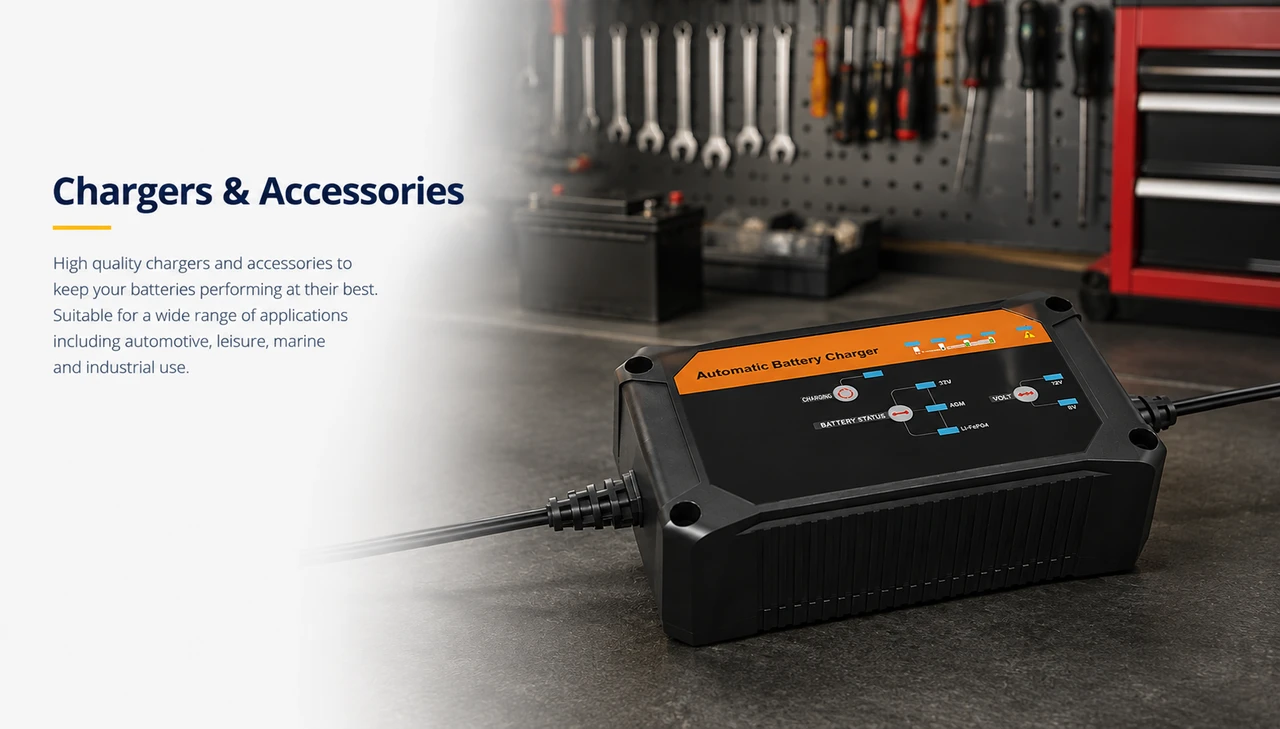
Chargers & Accessories
High-quality chargers and accessories to keep your batteries performing at their best. Suitable for a wide range of applications including automotive, leisure, marine and industrial use.
There are no products listed under this category.